
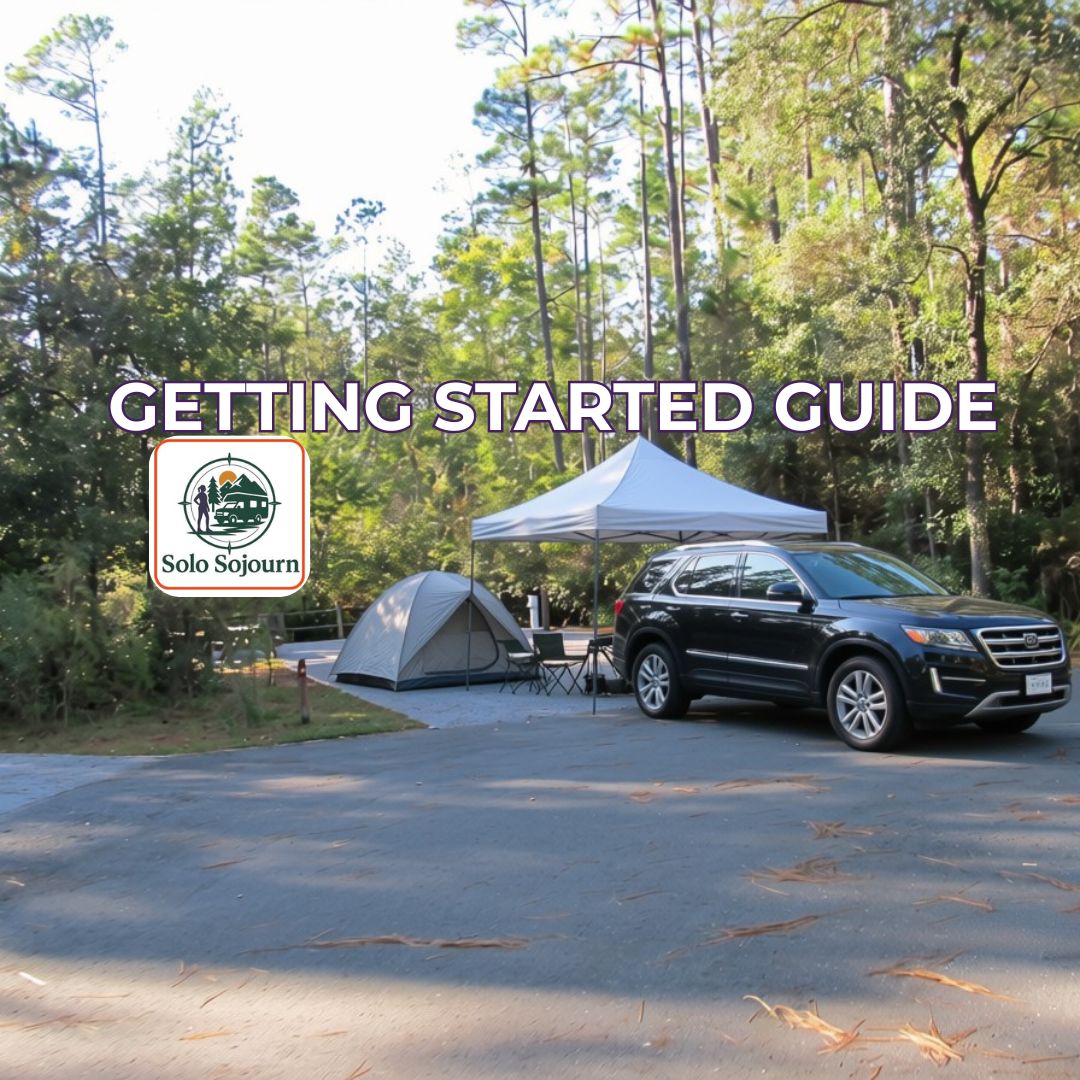
Getting Started with Solo Camping
You don’t need a fancy RV or years of experience. You just need to start where you are.
First, Let’s Get Real
If you’re reading this, you might be scared. Excited, but scared. You might think you’re too old, too inexperienced, or too alone to try camping by yourself. Let me tell you something: I felt exactly the same way. And I still went. And you can too.
1. You Can Do This (Yes, Really)
Before we talk about gear or campgrounds, we need to talk about mindset. The biggest barrier to solo camping is not logistics; it is believing you cannot.
Common Fears, and the Truth
❌ “I’m too old to start camping”
✅ I started seriously camping again in my 50s. Some of the most adventurous solo campers I know are in their 60s and 70s. Age is a number, not a disqualification.
❌ “It’s not safe for women alone”
✅ Staffed state and national park campgrounds have rangers, hosts, gates, and neighbors within shouting distance. That is not the same as being alone in the woods. Choose your campground carefully, take basic precautions, and you remove most of the risk people imagine.
❌ “I don’t have the right gear”
✅ You can car camp with gear you probably already own. Start small, test what works, then upgrade gradually.
❌ “I don’t know what I’m doing”
✅ Neither did I when I started. That is why campgrounds have rangers, why online communities exist, and why I am writing this guide.
2. Start Where You Are
You do not need to buy an RV to start camping. You do not even need a tent if you are willing to sleep in your vehicle, which is what I do. You can start with what you have.
Car Camping (My Current Setup)
What you need:
- A vehicle you can lie down in (mine is an SUV with the back seats folded)
- Sleeping bag or blankets
- Pillow
- Cooler for food
- Water bottles
- Flashlight or headlamp
- Camp chair (optional but nice)
Rough cost to start: $50 to $150 if you already own most of it. $200 to $300 if you are buying from scratch. Prices as of 2026.
Why I like car camping:
- No tent setup in the dark
- Protection from weather and bugs
- Lock your doors
- Charge your phone from the car
- Stay dry in Florida’s surprise rainstorms
Tent Camping
What you need:
- Tent (a 2 or 3 person tent is right for one person plus gear)
- Sleeping bag
- Sleeping pad or air mattress
- Pillow
- Flashlight or headlamp
- Cooler
- Camp chair
- Basic cooking setup (optional)
Rough cost to start: $150 to $300 for a budget setup. $300 to $600 for gear that lasts. Prices as of 2026.
Benefits of tent camping:
- More space to spread out
- Better ventilation on hot nights
- Feels more like real camping
- You can stand up and move around
- Easier to cook at your site
Small RV, Van or Camper
Reality check:
This is where I am headed eventually, but it is not where you need to start. A small trailer, pop-up camper, or converted van gives you more comfort and space, and it costs significantly more upfront. Start with car or tent camping, find out whether you love it, then consider upgrading.
Rough cost: $3,000 to $15,000 for a used small trailer or pop-up camper, and well beyond that for larger RVs. Prices as of 2026 and they move with the season.
💡 My advice: do not spend thousands on an RV until you know you love camping solo. Test the water first for under $300.
3. Essential Gear on a Budget
You do not need everything at once. Here is my honest split between must-haves and nice-to-haves.
MUST-HAVES
✓ Something to sleep in or on
✓ Light source (flashlight or headlamp)
✓ Water storage
✓ Food cooler
✓ First aid kit
✓ Whistle
✓ Phone charger and power bank
✓ Your trip plan sent to one trusted person
NICE-TO-HAVES
⭐ Camp chair
⭐ Camp stove for cooking
⭐ Solar charger
⭐ Portable shower
⭐ Camping table
⭐ Hammock
⭐ String lights
💡 Money-Saving Tips
Thrift Stores
Sleeping bags, coolers and camp chairs all turn up used
Facebook Marketplace
End-of-season camping gear sales
Borrow First
Test gear from friends before you buy
Buy One at a Time
Upgrade gradually as you learn what you actually need
4. Planning Your First Solo Trip
You have some basic gear. Here is the step by step I use.
1 Choose a Beginner-Friendly Campground
Look for:
- State or national parks with staffed campgrounds
- Full amenities: bathrooms, water, electricity
- A campground host or ranger on site
- Good reviews from other solo women campers
- Close to town for your first trip
💡 The Solo Sojourn Trail app is being built to rate Florida campgrounds for solo women’s safety and accessibility. It is in beta now and you can try it at solosojourntrail.com.
2 Book Your Site Strategically
- Start with one night only. You can always extend.
- Choose a weekend with a good forecast
- Pick a site near the bathhouse
- Avoid holiday weekends for a first trip
- Book midweek if you can. Quieter and often cheaper.
3 Tell Someone Your Plans
Always tell a trusted friend or family member:
- Where you are camping, the exact campground and site number
- When you are arriving and leaving
- When they should expect to hear from you
- Emergency contact details for the campground or park
Set a check-in schedule. Text when you arrive, before bed, and again next morning.
4 Pack Smart
Make a checklist and tick items off as you pack.
- Sleeping setup: bag, pillow, pad
- Clothing in layers, Florida weather turns
- Food and water, more than you think
- First aid kit
- Flashlight and spare batteries
- Phone, charger, power bank
- Toiletries
- Trash bags
- Something to do: book, journal, cards
5. What to Expect, Real Talk
Let me be honest about what your first solo camping trip will actually be like.
You WILL Feel Proud
Setting up camp by yourself, spending a night outdoors alone, proving you can do this. It is empowering in a way few things are.
You Might Feel Nervous
Every small sound at night feels louder when you are alone. That is normal. Bring a good book or download a comforting podcast. It fades with experience.
Something Won’t Go To Plan
Maybe you forget something. Maybe the sleeping pad deflates. Maybe it rains when it was not supposed to. That is camping. Laugh at yourself and learn for next time.
You’ll Probably Want to Go Again
Most people who try solo camping and get through the first night are already planning the next trip before they leave the campground.
6. Connect with Community
You are not doing this alone. Here is where to find the rest of us.
Ready to Book Your First Trip?
You have got this. Start small, be smart, and remember that every experienced camper was once a nervous beginner.