
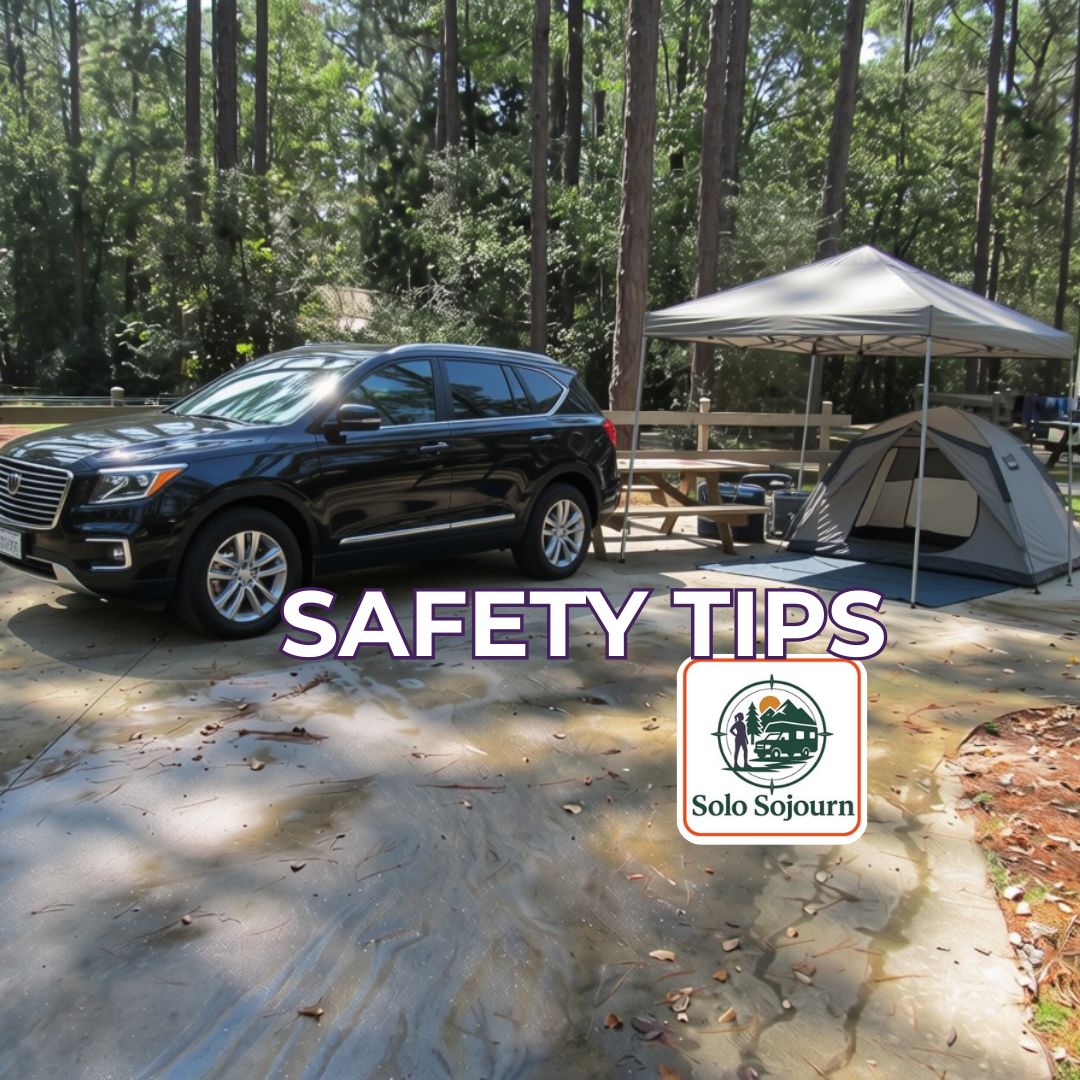
Safety Tips for Solo Women Campers
Smart preparation and practical strategies to help you camp safely and confidently in Florida.
Let’s Talk About Safety
Safety matters, and it should not stop you from camping. A staffed state or national park campground has rangers, hosts, a gate, posted rules, and neighbors within shouting distance. That is a very different situation from being alone in the woods, and most of the risk people imagine disappears when you choose the campground carefully.
This guide covers practical strategies for solo women camping in Florida, without the fear-mongering. These are things I actually do, not worst-case scenarios.
1. Campground Selection, Your First Line of Defense
Choosing the right campground is the single most important safety decision you will make.
What to Look For
✅ Staffed campgrounds
Choose parks with rangers or campground hosts on site, especially for your first few trips.
✅ Reviews from other solo women
Look for reviews written by women camping alone, not by couples with a Class A.
✅ Full amenities
Bathhouses, water and electricity mean better maintenance and more people around.
✅ Active management
Florida State Parks and the national forests run regular patrols and post clear rules.
✅ Cell coverage
Check the coverage map before you go. Not for Instagram, for emergencies.
Red Flags to Avoid
❌ Completely isolated primitive sites. Save those for when you have experience.
❌ Campgrounds with recent reviews complaining about safety or management
❌ Anywhere you would be the only camper, particularly midweek in the off season
❌ Sites with no ranger presence and no posted emergency contact
❌ Poor lighting, broken gates, unlit bathhouses, or a site you cannot drive straight out of
How to Research
- Read reviews from the last six months, not the last six years
- Check the park’s Facebook page for closures and conditions
- Call the ranger station and ask your actual question
- Look for reviews written by women travelling alone
- Check the Solo Sojourn Trail app, currently in beta
2. Preparation and Planning
The key to safety is preparation, not paranoia.
Share Your Itinerary
Tell a trusted friend or family member:
- Exact campground name and location
- Your site number if it is assigned
- Arrival and departure dates and times
- The check-in schedule you will follow
- The park’s emergency contact number
Set Up Check-Ins
Establish a schedule and stick to it:
- When you arrive
- Before bed each night
- In the morning when you wake
- When you leave
If they do not hear from you, they know to call the park.
Download Offline Maps
- Google Maps offline area saved for the region
- AllTrails offline maps if you plan to hike
- The park map PDF saved to your phone
- Emergency contacts saved where they work without signal
Pack Safety Essentials
- Charged phone and a power bank
- Whistle, which carries further than your voice
- First aid kit
- Flashlight and spare batteries
- Weather radio or a weather app with alerts
- Written emergency contact card, in case the phone dies
3. On-Site Safety Practices
Once you arrive, a few simple habits do most of the work.
Choosing Your Campsite
🏕 Near the bathhouse
Convenience plus visibility equals safety
🏕 Not isolated
Stay where others can see and hear you
🏕 Good sight lines
You want to see who is walking up
🏕 Nose out if you can
Park so you can drive away without reversing
Daily Safety Habits
✓ Lock your vehicle every time, including the walk to the bathhouse
✓ Keep valuables out of sight
✓ Do not advertise that you are alone
✓ Stay aware of who is around you
✓ Trust your instincts
✓ Keep your phone charged
✓ Know where the host site and the exit are before dark
✓ Set your camp up before sunset on the first night
4. Wildlife and Environment, Florida Edition
Florida has its own list. Here is what actually matters, taken from the agencies that set the rules.
Alligators
- Never feed an alligator. It is illegal and it is what creates a dangerous animal.
- Keep a safe distance. FWC does not publish a number of feet, so use judgment and give it far more room than feels necessary.
- Swim only in designated swimming areas, in daylight, and without your dog
- Keep pets leashed and away from the water’s edge
- Be extra alert at dawn and dusk
- If one approaches, back away slowly
- Concerned about a specific animal? Call FWC’s nuisance alligator line, 866-FWC-GATOR (866-392-4286)
Source: Florida Fish and Wildlife Conservation Commission
Snakes
Florida has around 50 native snake species and only six are venomous. Most of what you see is harmless.
- Watch where you step, sit and put your hands
- Never reach into a dark space you cannot see into
- Wear closed-toe shoes, and boots in tall grass
- Never handle a snake, including one that appears dead
If a Snake Bites You
Do this:
- Call 911 and get to a hospital. Do not wait for symptoms.
- Poison Control, 1-800-222-1222, will talk you through it
- Sit or lie down, keep the bite in a neutral, comfortable position
- Take off rings and watches before swelling starts
- Wash with soap and water, cover with a clean dry dressing
- Mark the edge of the swelling on the skin and write the time next to it
- Photograph the snake only from a safe distance
Never do this:
- No tourniquet
- Do not cut the wound
- Do not try to suck out the venom
- No ice and do not soak it in water
- No alcohol, aspirin, ibuprofen or naproxen
Source: CDC
Black Bears
Florida has a healthy black bear population. Ocala National Forest and the state forests are bear country, and the Forest Service has a food storage order.
- Store food in a bear-resistant container or inside a hard-topped vehicle
- If you must hang it, 10 feet up and 4 feet out from the trunk
- Attractants means more than food: toothpaste, soap, toiletries, cooking grease, pet food and garbage
- Never burn, bury, or leave food out
- In a campground, move away slowly and get into your vehicle. Do not run.
Source: US Forest Service, National Forests in Florida
Mosquitoes and Ticks
- Worst at dawn and dusk
- Use an EPA-registered repellent. DEET works; picaridin is an alternative if you dislike the feel.
- Long sleeves and long trousers in the woods
- Check yourself for ticks every day, and again before bed
- Remove a tick with fine-tipped tweezers, grasp close to the skin and pull straight up without twisting
Lightning
Florida no longer tops the country for lightning strike density, Oklahoma did in 2025, but Florida still leads the nation in lightning deaths. Treat every storm seriously.
- Get inside a hard-topped vehicle or a real building
- Never shelter under a tree, and never in a tent
- Wait 30 minutes after the last rumble of thunder before going back out
Sources: AEM and Vaisala 2025 annual lightning reports; National Weather Service
Heat and Humidity
Know the difference between the two, because one is uncomfortable and the other can kill you.
- Heat exhaustion: headache, nausea, dizziness, weakness, irritability, thirst, heavy sweating, less urine than normal. Get into shade, loosen clothing, cool the head and neck, sip cool water, and get checked.
- Heat stroke is a 911 emergency: confusion, slurred speech, altered behavior, loss of consciousness, seizures, very high body temperature, skin that is hot and dry or drenched. Call 911, then cool the person fast with cold wet cloths at the neck, armpits and groin.
- Drink before you feel thirsty, sun protection, and take breaks in the shade
Source: CDC
Storms and Hurricane Season
Atlantic hurricane season runs June 1 to November 30, which covers most of the camping year in Florida.
- Afternoon thunderstorms are normal, keep rain gear where you can reach it
- Secure or stow loose gear before you go to bed
- Most afternoon storms pass quickly
- In hurricane season, check the forecast daily and know the park’s evacuation route
- Do not wait for an order. If a storm is tracking your way, leave early while the roads are clear.
5. Emergency Preparedness
What to carry, and what to write down before you lose signal.
First Aid Essentials
- Bandages and gauze
- Antibiotic ointment
- Pain relievers
- Antihistamine
- Fine-tipped tweezers and scissors
- Moleskin for blisters
- Your own prescriptions
- Epinephrine auto-injector if you carry one
- Insect bite treatment
Emergency Contacts
Save these in your phone and also write them on a card. A dead battery should not cost you the numbers.
- 911. Worth knowing: in the US a mobile phone can usually reach 911 over any available carrier’s network, even with no bars showing for your own carrier and even with no active plan. Text-to-911 works in many but not all Florida counties, so do not count on it.
- Park ranger station, non-emergency
- The park’s posted emergency number
- Your emergency contact person
- Nearest hospital, looked up before you leave
- Poison Control, 1-800-222-1222
- FWC nuisance alligator line, 866-392-4286
- FWC wildlife alert, 888-404-3922, for poaching or a wildlife emergency
6. Trust Your Instincts
If something does not feel right, it probably is not.
⚠️ Warning Signs
- Someone keeps trying to start a conversation after you have clearly ended one
- Someone asks whether you are camping alone, then asks again
- The campground is far emptier than you expected
- Nearby campers are drunk or escalating
- You feel watched or followed
- Your gut is telling you to leave
✓ What to Do
- Do not second-guess yourself
- Pack up and leave. Forfeiting the fee is fine.
- Go to the ranger station or the campground host
- Drive to the nearest public, lit place if you need to
- Call your emergency contact
- Report it to the park rangers, so the next woman benefits
Your safety is worth more than a camping fee or the fear of making a scene.
The Balance Between Safe and Scared
Solo women camp in Florida every week of the year without incident. The goal is not to be paranoid. It is to be prepared, and then to go.
Most trips are wonderfully uneventful. You meet friendly neighbors, you sit outside in the quiet, and you come home with a story. Everything on this page is insurance. You will probably never need most of it.
The biggest risk is not camping. It is letting fear keep you home.
Ready to Plan Your First Safe Trip?
Pick a staffed campground, tell one person where you are going, and book a single night.